
Fenghuang Ancient Town Travel Guide
Fenghuang — "Phoenix" — is the most photogenic old town in China, a 1,300-year-old riverside settlement in the hills of western Hunan (Xiangxi). Wooden stilt houses lean out over the Tuo River, arched bridges string the banks together, and after dark the whole town glows and doubles in the water. Here's how to make the most of it.
Getting to Fenghuang
The easy way in is the high-speed train to Fenghuang Ancient City Station (on the Zhangjiajie–Jishou–Huaihua line), a short taxi from the old town. Many travelers pair it with Zhangjiajie, roughly four hours away by road — the two make a natural western-Hunan loop. Once you're in the old town, everything is on foot; cars stay outside the historic core.
The old town on the Tuo River
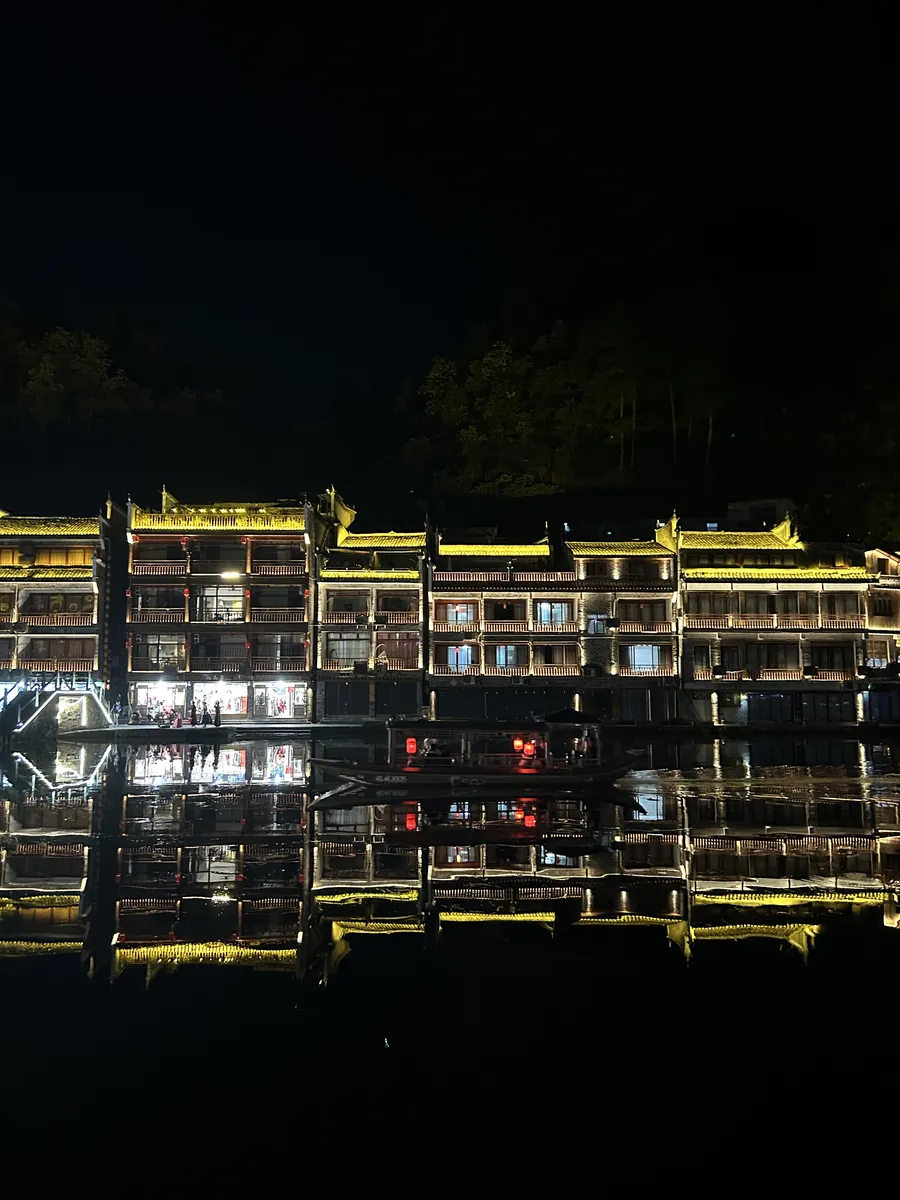
The heart of Fenghuang is the Tuo River and the diaojiaolou — stilt houses propped on slender wooden posts right over the water. Walk the flagstone lanes, cross the river on the line of stepping stones or the narrow wooden footbridges, and take a wooden boat downstream past the pilings. It's an easy place to simply wander; getting a little lost in the back lanes is the point.
Bridges and landmarks
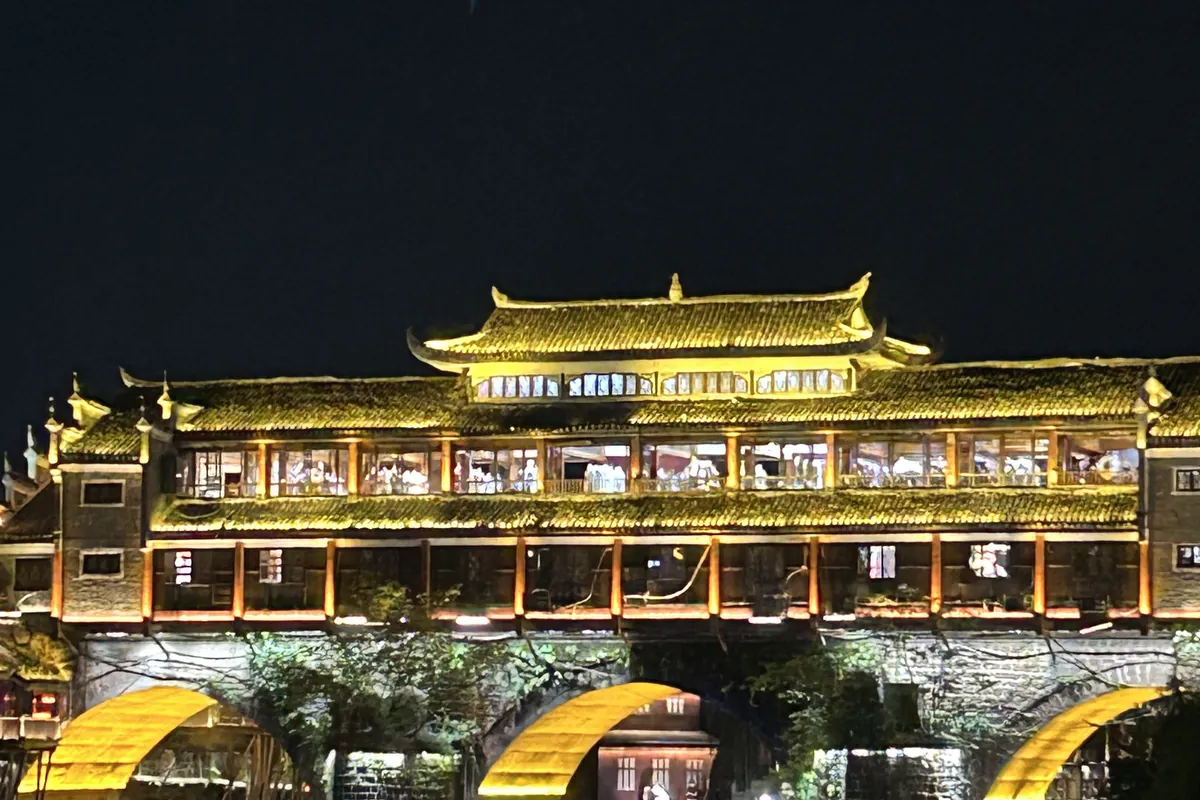
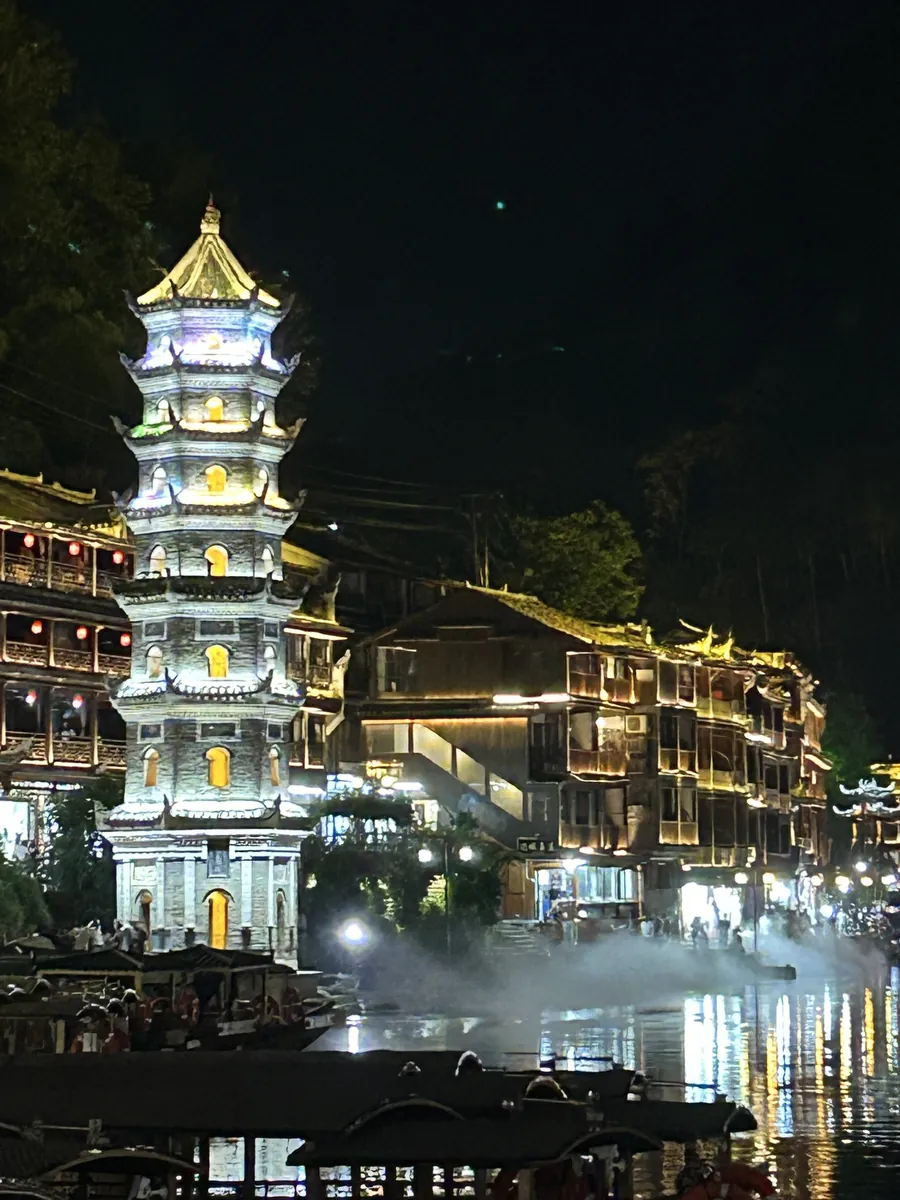
The town's signature structure is the Hong Bridge (Rainbow Bridge), a covered stone wind-and-rain bridge with a tiled upper gallery — lit gold at night, it's the classic Fenghuang postcard. Upriver stands the slender Wanming Pagoda, and the riverside is dotted with old gate-towers and the former homes of the writer Shen Congwen and artist Huang Yongyu, both Fenghuang sons. The area is also a center of Miao and Tujia ethnic culture — you'll see silverwork, batik, and embroidery in the shops.
When to go
Fenghuang is a night town first — plan to be on the riverbank as the lights come up and the reflections appear. But don't skip the early morning, when mist hangs over the Tuo River and the lanes are quiet before the day-trippers arrive. Staying at least one night lets you see both.
A few practical tips
- Stay inside the old town by the river — the walkable riverside at night is the whole experience.
- Weekends and Chinese holidays get very busy; a weekday visit is calmer.
- Try the ginger candy pulled fresh in the lanes, and sit down to sour-soup fish — the Xiangxi specialty.
- Mobile pay (Alipay/WeChat Pay) works everywhere, from boat tickets to street snacks.